Precious Reminiscences Of Charismatic Boss
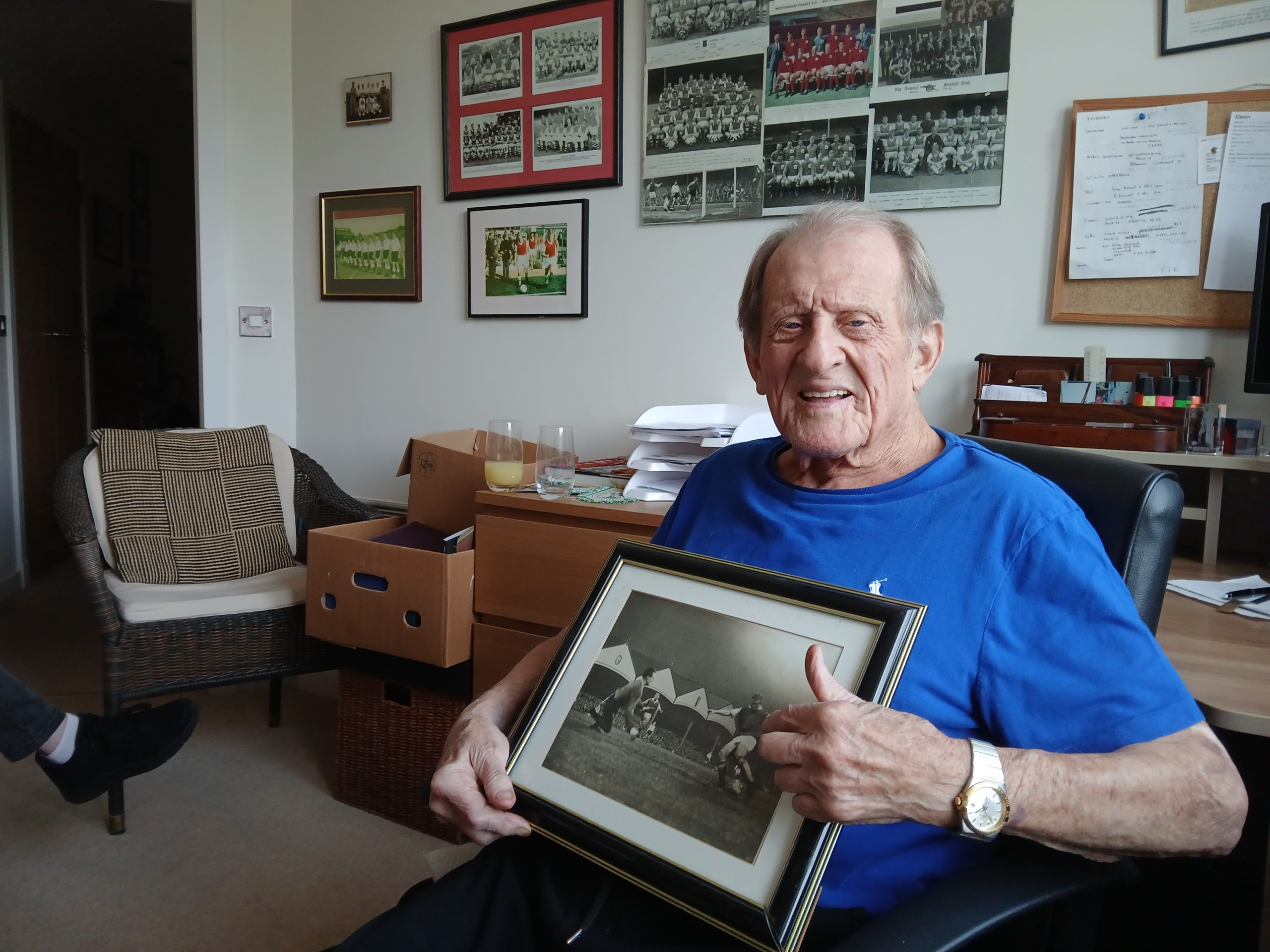
It lasted 45 minutes, with a hydration break, but we both departed with the impression that John Barnwell would have preferred going the full 90, plus as much additional time as possible.
The club’s second League Cup-winning manager does not see many Wolves personnel these days, so the opportunity to extend an invitation and wallow in some gold and black nostalgia was one he simply lapped up.
There was a brief chat about the views from their luxury apartment on the banks of the River Trent and another mention of the creaking hips that are seriously limiting his mobility.
Then came a tour of his office, wall photographs included, and a homing-in on ones showing him appearing for an England age-group line-up, running out alongside George Eastham for Arsenal at Highbury and even scoring for the Gunners past Geoff Sidebottom at Molineux in 1960.
Otherwise, it was Wolves, Wolves, Wolves and we bounded along with barely a moment to pause for breath.
My regular travelling companion, John Lalley, kicked off by raising the happy subject of the 1980 final against Nottingham Forest – the club at which the Barnwells watch virtually every home game these days, usually with their near neighbour, John McGovern, as chauffeur.
Our host painted a bit of Molineux background first and then clicked into full gear….
“When I arrived at Wolves late in 1978, we were one place off the bottom of the table and it was all about just avoiding relegation,” he said. “At a supporters’ night, Harry Marshall spoke about me bringing in entertaining, winning football and there was a lot of laughter when I asked him on the mic which of those requirements he wanted me to see to first.
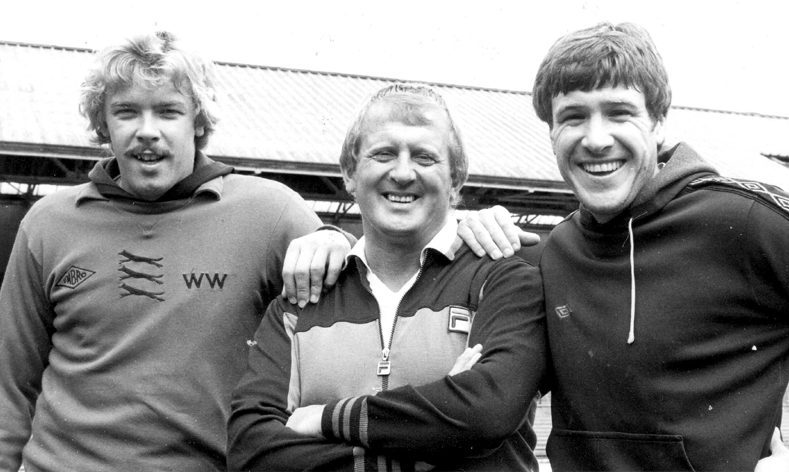
“We stayed up with plenty to spare, then I signed Emlyn Hughes that summer. A good number of the Wolves squad were ageing together and I saw John Richards and Kenny Hibbitt, two top players and decent guys, as the leaders in the dressing room.
“Bringing in Emlyn as captain was something I had to manage carefully because there were other lads like Derek Parkin, John McAlle, Geoff Palmer and Steve Daley, who had been at Molineux for years.
“Bob Hazell and George Berry were both good defenders but I didn’t fancy them playing side by side. They were dragged out of position too easily. That was partly behind the decision to go for Emlyn.”
The youngsters had each been named Wolves’ player of the year in the previous two seasons but Liverpool’s multi-decorated former skipper was clearly going to be one of the first names on the team-sheet.
“I wanted Emlyn to play deeper than George, so he could keep an eye on him and guide him. And George clearly had more pace, so he could recover his position in a hurry if he needed to.
“Derek Parkin was an excellent left-back, so very rarely caught out of position, and I think the lad on the right (the name ‘Geoff Palmer’ briefly escaped our otherwise highly lucid 87-year-old host) was very under-rated.
“When Geoff tackled someone, they knew they had been tackled. And he was extremely quick. He just didn’t read the game as well as Derek, so he sometimes lost high balls to the far post.”
John Robertson was the man who felt frequently and properly tackled in the all-Midlands League Cup final but there was another strand to the planning for that particular area of the Wembley pitch.
“Peter Daniel had been signed by Wolves mainly as a right-back, so asking him to play deeper than his usual midfield role was not difficult,” Barnwell added. “He sat just in front of Robbo to stop the ball getting him too often and Geoff was ready to go in when needed on the guy we saw as their danger-man.
“The plan worked a treat and Peter even hit the long ball from which Andy Gray tapped in the only goal.” Oh yes, Andy….

John (Barnwell) reminded us of the story of how he had bumped into Manchester City boss Malcolm Allison in Portugal in the summer of 1979 and received an opening enquiry for Steve Daley. City were taking the shorter route towards developing a younger squad and saw the 25-year-old midfielder as a key part of that.
“I told Mal that I wasn’t really looking to sell but if he offered what we considered a fair price, we would consider it.
“Harry Marshall was pleased when we finally got the fee up to £1.4m something. He wasn’t so pleased when I told him I quickly wanted to use it to buy Andy!
“I had been told I could spend what I brought in and thought Andy would excite the supporters, which he did right from the start.”
John (Lalley) recalled the manager sounding utterly positive when interviewed on Football Focus the lunchtime before Gray scored in a win at Arsenal for the third Wolves game running. His first three matches had brought him four goals and the team maximum points. Something big was building. Fifteen wins were registered away from Molineux that season and the sixth-place First Division finish was in itself a notable effort.
Mel Eves was another part of the exciting lift-off and Barnwell added: “He was a willing lad who would do just what you asked him to do. We saw that at Wembley. Steve Daley was a terrific attacking midfielder but wasn’t as good at tracking back.”
My travelling colleague recently watched the final on video yet again and observed what a fine game Willie Carr had in midfield, keeping it simple but hardly giving the ball away as Wolves strove to beat back the pressure from the warm favourites.
In Paul Bradshaw, the side possessed a quality keeper, too, albeit one who was nothing like as called upon as the heroic Gary Pierce on the same stage six years earlier. Braddy, like six others, played in a League Cup final win and two FA Cup semi-final defeats for Barnwell’s Wolves.
Long before Wembley, the manager had suffered the appalling car crash that seriously set him back. Richie Barker did much to hold the fort in his absence but we learned during our visit that the two were strictly work colleagues, not social friends.
Barnwell surprised us by insisting that he, like his no 2, actually preferred coaching to managing, although there were issues to govern over, like when Dave Thomas, whose signing from Everton had initially been seen as a master-stroke, fell out big-time with Barker over his choice of footwear and dislike of shin pads.

He also had to step in and side with player rather than coach when Gray argued for corners to be swung inwards rather than to Barker’s preference of outwards away from goal.
On the subject of off-field matters, Barnwell revealed he had a boardroom ally in George Clark Junior but found himself no friend of Harry Marshall’s.
He was also staunchly critical of the outlay on a vast, distant stand that plunged the club on the path to possible oblivion. “The ground lost so much of its atmosphere with that over-size stand being such a ridiculous distance from the pitch,” he added. “It used to be a really intimidating place for away teams to go to.”
And there was one final surprise disclosure for us before we hit the road ready for match-night. Barnwell had a spell overseeing fitness training for Nottinghamshire’s county cricketers, one of whom was the knighted great, Garfield Sobers, who died just over a week ago. “He actually lived in our bungalow for a while,” the long-time former Forest inside-forward said.