Barry’s Story Overflowing With Rich Content

 As the front cover amply illustrates, it’s a Wolves story in part only, albeit a substantial part.
But winning at Wembley with the club as both a player and a coach, flying high on America’s west coast, being invited to Olivia Newton John’s bedroom and winning the Welsh Cup as a manager, Barry Powell has had quite the life.
Exactly half of the 12 players who brought down Manchester City in the 1974 League Cup final have now gone into the book market and the young man who went on for the injured Dave Wagstaffe ten minutes from time has ensured the literary bar among them remains high.
This is a very readable account – full of super reminiscences. anecdotes and well-I-never-knew-that disclosures.
The Wolves family will hail the 72-year-old as one of their own, courtesy of how he was nurtured and blooded at Molineux and Castlecroft and sent into the wider world as an established first-team player.
Coventry and Derby subsequently saw plenty of him as well and there were links in the transfer gossip colums with several other clubs from this busy patch.
He was rumoured in the early 1970s to be seen by Albion as bait in a part-exchange deal for Asa Hartford, similarly soon afterwards with his good pal, Willie Carr, at the Sky Blues, and Birmingham were once keeping a close eye on him, too.
Villa, as far as we know, were in the background as potential admirers but their handsome stadium was the setting when he completed the paperwork for his 1975 move from Wolves to Highfield Road.
The real losers amid the retrospective thoughts of this proud Midlander in The Beautiful Game And Beyond are Stoke. They signed him on schoolboy forms and gave him the thrill of his young life when he was invited by Sir Stanley Matthews into the Victoria Ground changing rooms before the maestro’s testimonial game against an All Star International XI in 1965.
The problem for The Potters was that they did not then register him. As a result, Powell was free to put his talents in Wolves’ hands when they came calling and he gave Stoke particularly painful and frequent reminders of their missed opportunity by scoring five times against them over the years, including once for Wolves in a 1974 meeting at Molineux.
The book also tells us that another Flowers, in addition to Ron and Tim, might just have registered on the landscape in these parts. Barry rated his childhood mate, Steve Flowers, as a better player than himself but he soon tired of the travelling to Wolverhampton. Not so the author.
“They used to give me half a crown expenses and I usually got an egg and tomato roll and cup of tea on the way back home,” he wrote. “I used to think I was a king. I have a lot of time for Wolverhampton Wanderers.”
Powell, at 5ft 1in and less than 7st, was very much the raw material. His room-mate at his first digs – run by Mrs Eagle near Bantock Park – was the considerably older and more powerfully built grammar schoolboy who may or may not have himself felt royally blessed but who would become known as King John.
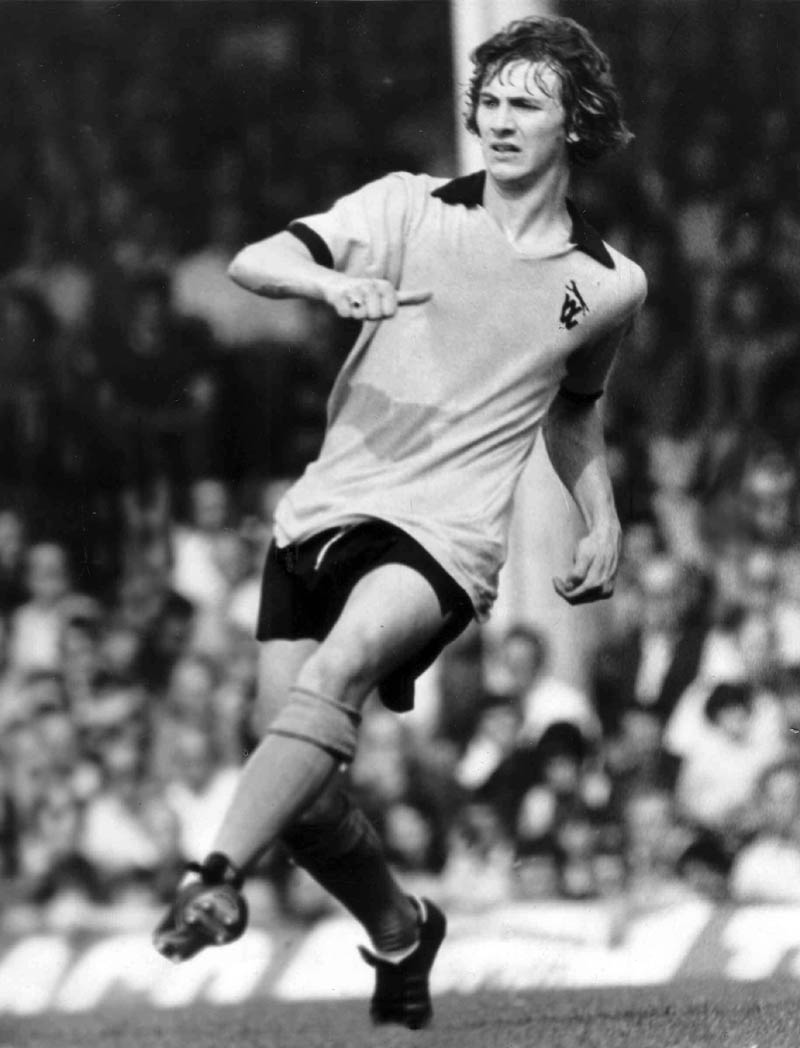 This website’s co-owner has been quite clear over the decades about breaking down the 1970s Wolves dressing room into its different groups. Among those who became first-team stars, he knocked around plenty with contemporaries such as Kenny Hibbitt and John McAlle, but considerably less with older team-mates like Waggy, Mike Bailey and Derek Dougan.
Powell, who cleaned Peter Knowles’s boots and had the thrill of playing with him in the reserves, refers to himself in print as having been ‘a cheeky little bugger’ and is equally clear on saying who his closest pals were during his Molineux upbringing.
He was with Geoff Palmer, Alan Sunderland, Steve Daley and Peter Eastoe in the Wolves squad who reached the FA Youth Cup semi-final in 1970-71 before losing over two legs to Arsenal.
Powell was then made captain in the much less successful campaign in the competition 12 months later and won his only England Youth cap by going on as substitute for the unrelated Steve Powell in a friendly against Scotland at Villa that also featured Brian Little.
Imagine the collective pride when Barry and Palmer lined up together for England Under-23s in Portugal and when he was a team-mate of Sunderland’s against the young Scots at Newcastle. Richards and Palmer were international team-mates, too – against Wales at Bristol City.
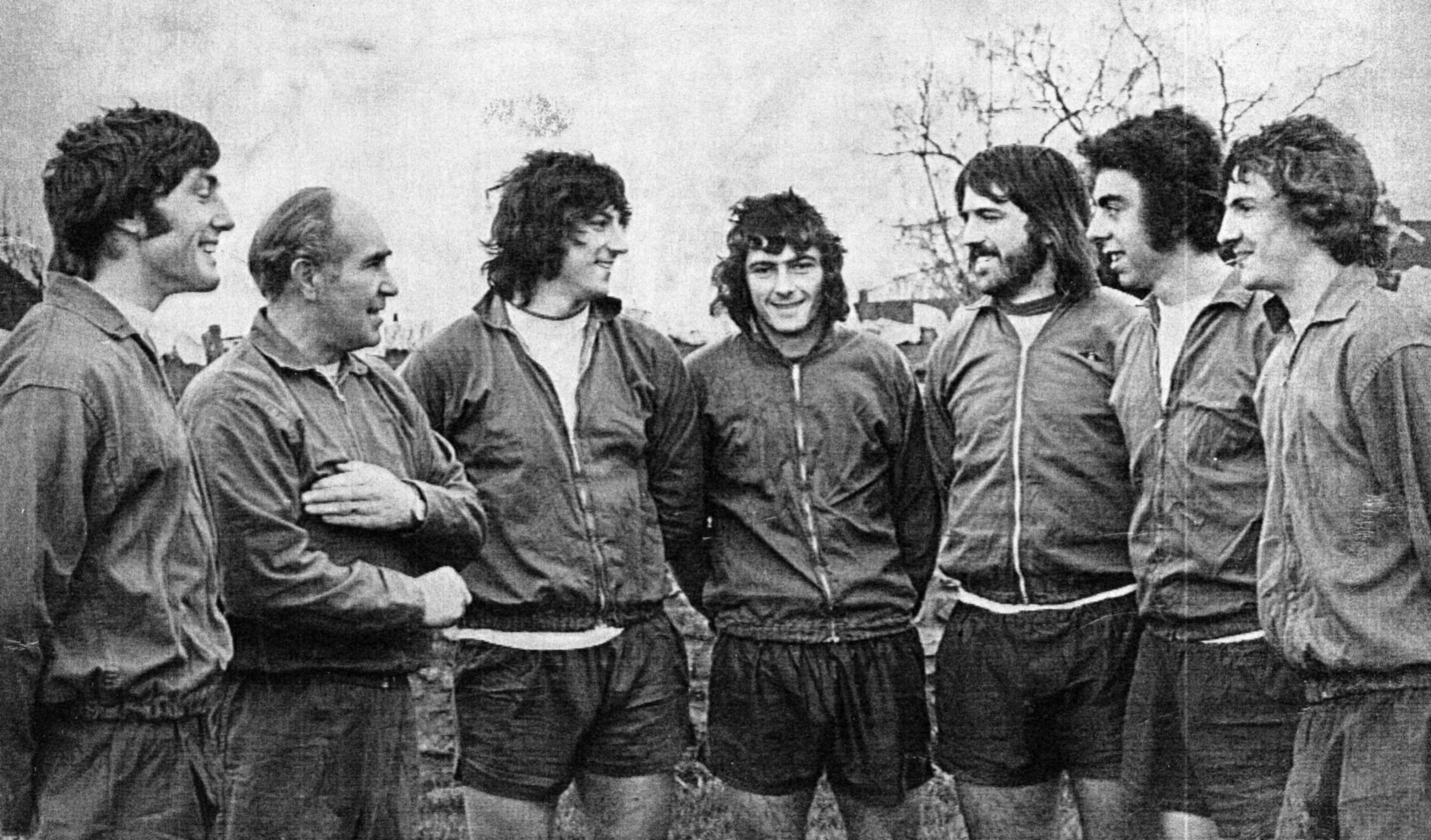
By then, Barry, who totalled four under-23 caps, had not only made his senior debut but appeared in an FA Cup semi-final and in the League Cup final. What a rise for such a slender youngster who, the book regularly reminds us, tackled feverishly with every ounce nature had given him, could run endlessly, pass superbly and score a goal or two.
Throw in some European experience – and doesn’t he look proud on that photo showing him following skipper Bailey out on to the pitch for the UEFA Cup tie in Porto! – and his CV becomes even more impressive.

His life, from Kenilworth to many parts of the world and back again, is a story well worth telling. This hard-back £20 publication, written in collaboration with the prolific Clive Corbett, is rich on tales from Wolves’ youth trips to Africa and Holland in the early 1970s and from his heroics alongside Peter Withe, Jimmy Kelly, Don Gardner and Chris Dangerfield in the colours of Portland Timbers.
Leaping forward more than a decade, Powell followed Palmer as only the second man to play in both the top division and bottom division for Wolves.
Initially welcomed for a trial by Little and then signed by Graham Turner to help with the rebuilding of a badly bruised and drastically different club, he appeared in a losing play-off final a year before happily addressing an issue that had bugged him since 1974.
When Wolves were back at Wembley for the 1988 Sherpa Van Trophy final, the coach asked his boss if he could leave the dressing room and walk to the tunnel to take in the atmosphere just before the teams emerged. “I stood there with tears dripping down my eyes,” he says. “You don’t get to experience that walking out as a player – you get caught up in the occasion. I remember more about that (visit) than 1974, when I was playing.”

We shouldn’t forget the sizeable impact Barry made as a developer of young players at Wolves and the book’s unusual habit of including lengthy tributes from his colleagues stretches into generous quotes from Colin Taylor, Andrew Harnett and even Stan Collymore.
We must also remember that a lot of his career as a player, coach and manager was spent elsewhere. At Coventry, where he probably played the best football of his life in his mid-20s after being bought for £75,000, he formed a wonderful partnership on and off the field with Tommy Hutchison, so much so that the Scottish winger was chosen to write the foreword.
Much less fulfilling was Powell’s time at Derby and he looks back with regrets, too, at his decision to accept a £3,000 payment and go on a 1982 rebel tour of South Africa that was supported by Jimmy Hill, whose ‘pop and crisps’ days he used to attend at Highfield Road as a Sky Blues-supporting youngster.
John Barnwell was the squad’s manager after his sacking by Wolves several months earlier and Jack Taylor travelled as referee at a time when he was also the commercial manager at Molineux.
But Barry now wishes he had said ‘no’ when approached by agent Dennis Roach, although he and his room-mate, Brian Greenhoff, accepted an invite in for drinks from Olivia Newton John and her partner next door in a Sun City hotel.
What did appeal to him were his two stints in the Far East, where he linked up for the fourth time with Hutchison after continuing to impress as his supply line during brief stays at Burnley and Swansea.
Powell went on to lead Aberystwyth into Europe through a fourth-place finish in the Welsh League – a source of great pride to his Welsh-born father, Ivor Powell, who had been on the books of Cardiff and QPR as a youngster.

Barry, who was approached by Wales with a view to under-23 recognition before England tempted him into their system, also later inspired Hednesford, as manager, to the winning of the FA Trophy at Villa Park. Thank goodness his dad lived long enough to be present.
I would like to have seen the photos used bigger and better because there is a good variety of them but there’s lots to read in these 258 pages and we hope our followers will wish to do so.
*We have one signed spare copy of The Beautiful Game And Beyond, available on a first come, first served basis at face value (£20). Posting and packaging would be extra but we will happily arrange a hand-over on a Molineux match day or night if we can. Please email us if you are interested.