Doog A ‘Page Boy’ Without Equal
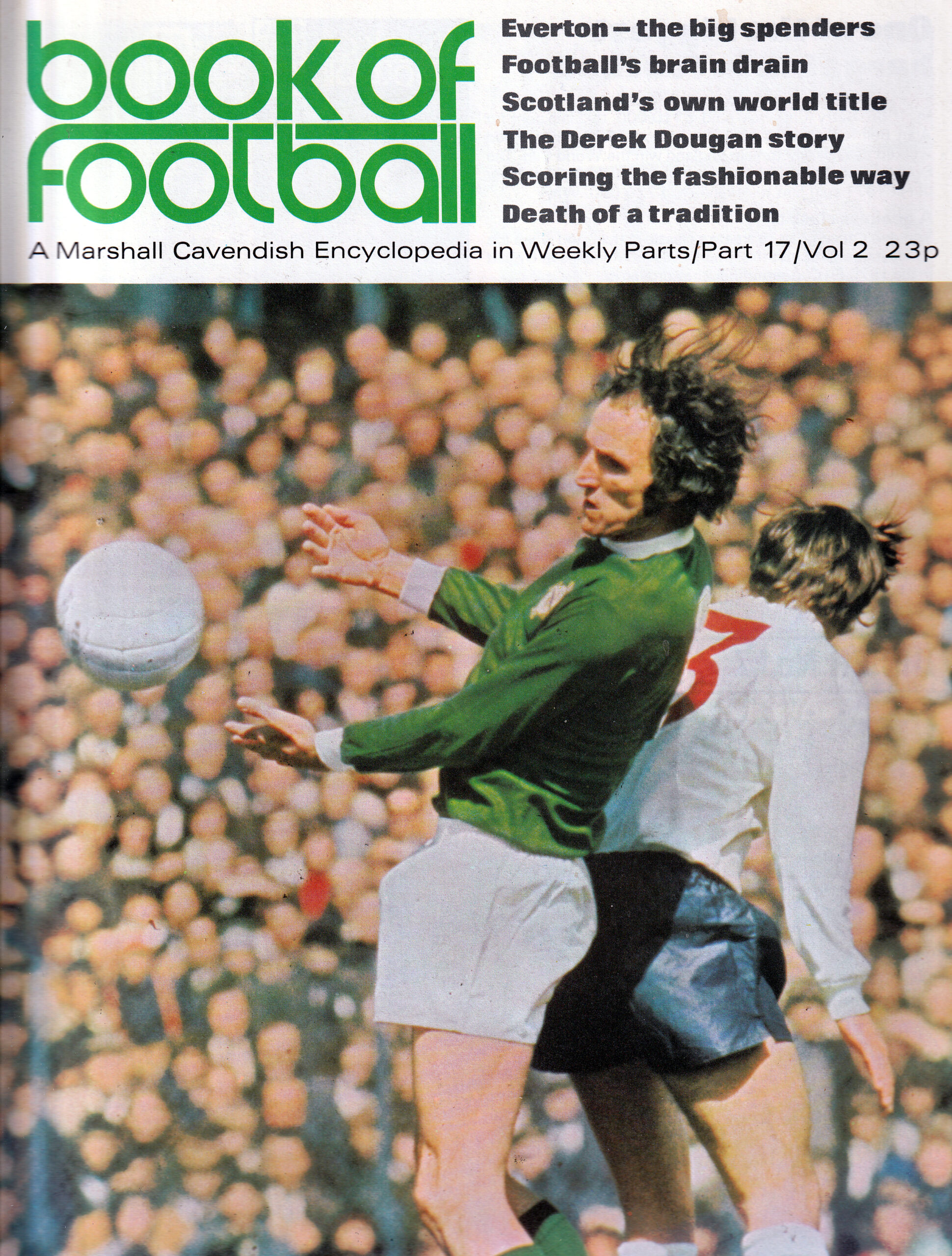 Never a football magazine or compilation book seemed to surface in the 1960s and 1970s without mention of Derek Dougan.
We have written before that he was one of the most photographed players of his era – indeed, my 2007 Wolves In Pictures publication contained no fewer than 43 images of him.
In recent weeks, we have revisited the Marshall Cavendish Encyclopedia Book of Football and been reminded yet further of the magnetism of the player who lit up Molineux for eight years from the final months of the club’s 1966-67 Second Division promotion campaign.
Five of the 22 pages in part 17 of this weekly production, whose contributors included Martin Tyler, Hugh McIlvenney and David Miller, were dedicated to The Doog, including the front cover shot (right) showing him beating Terry Cooper to a high ball in a Northern Ireland v England game.
‘Derek Dougan – troublemaker and troubleshooter’ is the headline to the article, which refers to his ‘rebel streak’ in its early paragraphs.
It goes on to quote him as saying he should not have put in a transfer request on the day he played for Blackburn in their 3-0 FA Cup final defeat against Wolves in 1960. “My heart ruled my head and I also admit I was wrong in playing,” he said, having declared himself fit after a pulled muscle suffered earlier in the week.
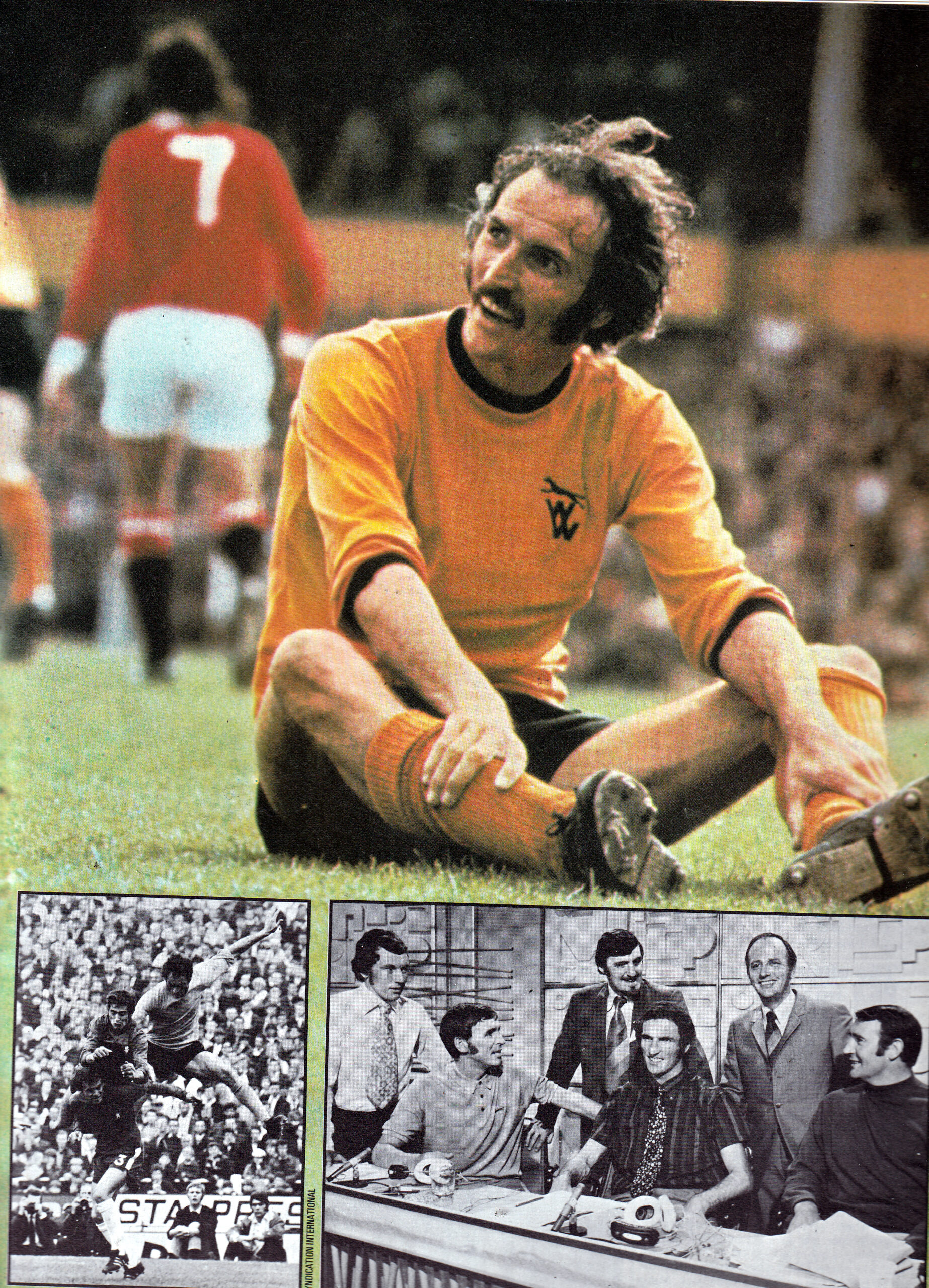
He was described in the piece as ‘easily the most popular footballer on a Midland scene desperate for success’ – a tag attached around the time he had his head shaven bald while playing for Villa in the early 1960s.
The praise made it all the more surprising that his next move was to Third Division Peterborough but the drop was softened by him being given the captaincy and restored to the Northern Ireland side.
His £50,000 move to Molineux on transfer deadline day in March, 1967 unleashed him on Division Two for the first time and he said: “My Second Division career is going to last only 11 games.” The article continued: “He was quite right and he charmed his way into Molineux hearts….Wolves dropped only one point in his first eight games.”
Promotion was duly won with time to spare and Dougan played his part in the stabilising process at the higher level. Not that the transition was smooth for club or talismanic attack leader.
Wolves flirted with relegation in their first season back up, then he was sent off against Sheffield Wednesday in August, 1969 and quickly vowed to stay out of trouble in future. It was his ‘fifth disciplinary commission in seven years and he emerged with a 14-day suspended sentence and £25 fine’.

Alas, his promise of greater self-control did not hold. “He tried hard but, in October of the same year, he was sent off again for allegedly addressing a few rash words to a linesman in a riot of a match against Everton at Molineux,” the unnamed reporter continued.
Dougan had already upset the football authorities by likening a disciplinary commission to a ‘Star Chamber with a bucket of whitewash in one corner and a bed of nails in the other’. He was banned for eight weeks after his pledge of good behaviour came unstuck against a Toffees side destined to win the League title six months later.
His own star would soon be rising again, though. Despite Wolves narrowly missing out on the European trophy he craved, there was the huge consolation in helping them to League Cup glory in 1974 in the twilight of his long, colourful and at times controversial career.