Cullis At Heart Of Astonishing Spectacle
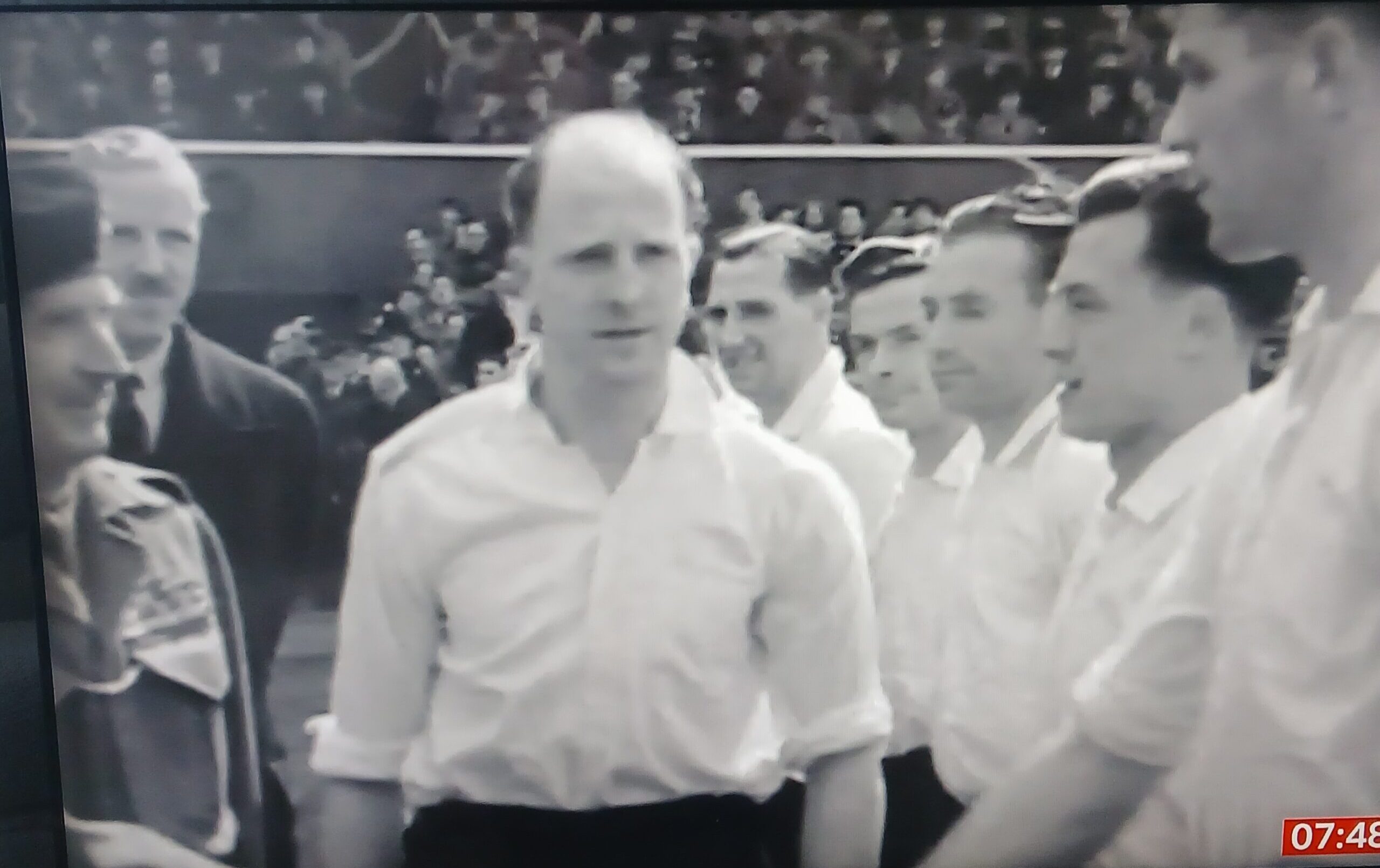
Not one of the 22 players on view is likely to have said as much but this was a game in which the two teams were in many ways combining as one to defeat a common much bigger foe.
Scotland v England at Hampden Park 82 years ago, with Matt Busby and Stan Cullis as rival captains, has passed into folklore as a victory for the home countries against Nazi Germany; a triumph of good over evil.
The match was staged in April, 1944, partially with the aim of raising public morale in the latter stages of the war, and was quite extraordinary for one reason: Well, it’s not often more than 133,000 turn out for a friendly.
My mind became focused on the occasion after a feature on BBC’s Breakfast yesterday, in which Cullis was seen leading none other than Field Marshal Bernard Montgomery along the line of England players for the traditional pre-match introductions.
This hero of two wars was in Glasgow on a tour of factories and shipyards and also watched the Wembley clash of the same two countries in the February.
Amazingly, the D-Day landings, in which Wolves defender Bill Shorthouse was wounded, were only a few weeks away, so Monty’s attendance at the matches was presumably an outward signal to German eyes that it was wartime business as usual here.
Losses on the beaches of Northern France were huge – devastating statistics which explain the comments Cullis made to me when I visited and interviewed him in 1990 for the Wolverhampton Wanderers Greats book I had been asked to write.
The Molineux skipper had seen enough in the stormclouds building up over Europe to persuade him to join up with the South Staffordshire Regiment six months before hostilities were declared.
In the event, he served as a physical training instructor in the war rather than in active combat and became good friends with Busby, who was employed in a similar capacity. But I still wondered, decades on, how he felt about missing out on hundreds more Football League appearances, possible League and FA Cup honours and dozens more official England caps.
“Not for one moment did I bemoan what I might have lost,” he told me at his home in Malvern, just south of Worcester. “I came home from the war in one piece and that was something to be grateful for. We all know that a lot of young men weren’t so lucky.”
The lengthy BBC feature yesterday morning included considerable input from Monty’s grandson, Henry Montgomery, who was interviewed in the studio and at both Hampden and the British Normandy Memorial.
He is raising awareness about the landings and sacrifices made and the www.britishnormandymemorial.org website shows how he is retracing his grandfather’s tracks to help improve educational classes to youngsters.
The footage of the Hampden clash in 1944 also contains clips of the actual game plus a sighting of long-time FA secretary Stanley Rous meeting the players, with the Scotland team in un-numbered shirts.
The fixture did not carry official caps for the participants, who included Frank Taylor, the full-back who played for Wolves in the 1939 FA Cup final against Portsmouth. This was his only England appearance in peacetime or the war but Cullis played 20 times for his country during the hostilities alone.
England lined up as follows: Frank SWIFT, Frank TAYLOR, Les COMPTON, Stan CULLIS, Joe MERCER, Frank SOO, Stanley MATTHEWS, Raich CARTER, Tommy LAWTON, Jimmy HAGAN, Les SMITH.
The offspring of Matthews and Lawton were also interviewed on the feature, which was presented by BBC reporter John Maguire. The Les Smith named above is the Villa and Brentford winger, not the namesake who played in the same position for Wolves in the 1950s.
Scotland’s side contained Celtic winger Jimmy Delaney, who later played for Manchester United, including in the two games (at Goodison Park and Hillsborough) of their FA Cup semi-final defeat against Wolves in 1949.
Archie Macaulay, then of West Ham but later to become Albion’s manager, was also in the dark blue that afternoon – a sure sign that ‘Anglos’ were not so readily excluded by the selectors as they were from official international matches in peacetime.
England’s goals were scored by Lawton (2) and Carter.